 MENU
MENU



 1
1title: Canova Bust
artist: <bdi lang="">Unknown author</bdi>
date: before 1939 <div style="display: none;">date QS:P,+1939-00-00T00:00:00Z/7,P1326,+1939-00-00T00:00:00Z/9</div>
medium: Technique marble
dimensions: size cm 77 73
source: Polish Ministry of Culture, Art and National Heritage
credit: Polish Ministry of Culture, Art and National Heritage
license:Public domain
 2
2title: <a href="https://en.wikipedia.org/wiki/Lady_Justice" class="extiw" title="w:Lady Justice">Justice</a>
artist: <bdi><a href="https://en.wikipedia.org/wiki/en:Antonio_Canova" class="extiw" title="w:en:Antonio Canova">Antonio Canova</a> </bdi>
date: 1792<div style="display: none;">date QS:P571,+1792-00-00T00:00:00Z/9</div>
medium: technique gypsum
dimensions: Size unit=cm height=129 width=129
current location: Institution:Gallerie di Piazza Scala it|Sezione I
source: [http://www.artgate-cariplo.it Artgate Fondazione Cariplo]
credit: <a rel="nofollow" class="external text" href="http://www.artgate-cariplo.it">Artgate Fondazione Cariplo</a>
description: <div class="description"> <p>The <a href="https://en.wikipedia.org/wiki/Relief#Bas-relief_or_low_relief" class="extiw" title="w:Relief">bas-relief</a> of the Goddess of Justice is part of a group of thirteen plaster casts – representing allegorical figures, scenes inspired by the Iliad, the Odyssey and Phaedo, and depicting two works of mercy – in the Foundation’s Congress Centre. The reliefs were executed by <u style="background-color:yellow;" class="">canova</u> as a gift for Abbondio Rezzonico, a member of the Roman Senate, between 1793 and 1795. Rezzonico had already commissioned from the sculptor the commemorative monument to his uncle <a rel="nofollow" class="external text" href="http://www.clementexiii.it/zoom/zoom_mostra.html">Pope Clement XIII</a>, which was erected in St. Peter’s but not unveiled until 1792, twenty-three years after the Pope’s death. In 1781, the Veneto artist had executed for the Senator the statuette <a rel="nofollow" class="external text" href="http://www.getty.edu/art/gettyguide/artObjectDetails?artobj=1521">Apollo Crowning Himself</a> now held by the Getty Museum in Los Angeles. Evidently the two men were on very friendly terms, probably also because they were both from the Veneto region. A frequenter of Rome artistic circles, Rezzonico also commissioned works from Piranesi and Pompeo Batoni – who immortalised him in a portrait now in the Museo di Bassano del Grappa. The bas-reliefs were hung in Villa Rezzonico at Bassano to create a “Canovian room”, as attested by 19th-century sources, similar to those in other aristocratic residences in Veneto (those of Zulian, Renier, Falier, Albrizi, Barisan, Cappello) as well as Rome (Villa Lante, Villa Torlonia). There is evidence that in the course of his career <u style="background-color:yellow;" class="">canova</u> produced various series of bas-reliefs, sometimes with different subjects, to satisfy the demands of collectors who kept up with all the current artistic trends. The most complete series of plaster casts, which were never executed in marble, is in the Gipsoteca in Possagno, and another series very like the one in the Cariplo Collection, is located in the Museo Correr, Venice. </p> <p>The technique used to execute them was the <a href="https://en.wikipedia.org/wiki/Lost-wax_casting" class="extiw" title="w:Lost-wax casting">lost wax</a> process, which enables a one-off piece to be produced from a cast obtained from a prototype: this allows the artist to work on the plaster and to give it a unique quality. We know that <u style="background-color:yellow;" class="">canova</u> was in the habit of emphasising this original aspect also to justify the cost of producing the pieces, although he delegated the actual production to talented assistants like Vincenzo Malpieri. </p> <p>The desire to promote his own work led <u style="background-color:yellow;" class="">canova</u>, spurred on by the intellectuals of the day such as Pietro Giordani and Francesco Leopoldo Cicognara, to reproduce his sculptures in engravings, in order to make his production more widely known through an economical, straightforward medium. The collection of prints dedicated to “Connoisseurs and Lovers of Fine Arts”, published by the Rome bookseller Pier Luigi Scheri in 1817, is one of the finest examples of this, and the sculptor invited some of the leading artists then active in Rome, including Vincenzo Camuccini, Raffaello Morghen, Jean-Baptiste Wicar, Tommaso Minardi and Francesco Hayez, to work on the project. </p> <p>Engravings of most of the plaster reliefs were executed, with the exception of the three Allegories connected with the design for Clement XIII’s tomb. </p> <p>The story of the Rezzonico reliefs is documented in the writings of the Rome antiquarian <a href="https://it.wikipedia.org/wiki/Giovanni_Gherardo_de_Rossi" class="extiw" title="it:Giovanni Gherardo de Rossi">Giovanni Gherardo de Rossi</a>: in 1793 <a href="//commons.wikimedia.org/wiki/File:Canova_Antonio,_Allegoria_della_Speranza.jpg" class="mw-redirect" title="File:<u style="background-color:yellow;" class="">canova</u> Antonio, Allegoria della Speranza.jpg">Hope</a> and <a href="//commons.wikimedia.org/wiki/File:Canova_Antonio,_Allegoria_della_Carit%C3%A0.jpg" class="mw-redirect" title="File:<u style="background-color:yellow;" class="">canova</u> Antonio, Allegoria della Carità.jpg">Charity</a>, casts made from the figures sculpted on Clement XIII’s sarcophagus, were delivered; <a href="//commons.wikimedia.org/wiki/File:Canova_Antonio,_Briseide_consegnata_da_Achille_agli_araldi_di_Agamennone.jpg" class="mw-redirect" title="File:<u style="background-color:yellow;" class="">canova</u> Antonio, Briseide consegnata da Achille agli araldi di Agamennone.jpg">Achilles Delivers Briseis to Agamemnon’s Heralds</a>, <a href="//commons.wikimedia.org/wiki/File:Canova_Antonio,_Uccisione_di_Priamo.jpg" class="mw-redirect" title="File:<u style="background-color:yellow;" class="">canova</u> Antonio, Uccisione di Priamo.jpg">Death of Priam</a> and <a href="//commons.wikimedia.org/wiki/File:Canova_Antonio,_Socrate_beve_la_cicuta.jpg" class="mw-redirect" title="File:<u style="background-color:yellow;" class="">canova</u> Antonio, Socrate beve la cicuta.jpg">Socrates Drinking Hemlock</a> can be dated to the same year; and <a href="//commons.wikimedia.org/wiki/File:Canova_Antonio,_Socrate_congeda_la_propria_famiglia.jpg" class="mw-redirect" title="File:<u style="background-color:yellow;" class="">canova</u> Antonio, Socrate congeda la propria famiglia.jpg">Socrates Taking Leave of His Family</a>, <a href="//commons.wikimedia.org/wiki/File:Canova_Antonio,_Danza_dei_figli_di_Alcinoo.jpg" class="mw-redirect" title="File:<u style="background-color:yellow;" class="">canova</u> Antonio, Danza dei figli di Alcinoo.jpg">Dance of the Sons of Alcynous</a> and <a href="//commons.wikimedia.org/wiki/File:Canova_Antonio,_Ritorno_di_Telemaco.jpg" class="mw-redirect" title="File:<u style="background-color:yellow;" class="">canova</u> Antonio, Ritorno di Telemaco.jpg">Return of Telemachus</a> and <a href="//commons.wikimedia.org/wiki/File:Canova_Antonio,_Allegoria_della_Giustizia.jpg" class="mw-redirect" title="File:<u style="background-color:yellow;" class="">canova</u> Antonio, Allegoria della Giustizia.jpg">Justice</a>, to 1794. The latter is the most interesting piece in the group, since it is the artist’s original study – and therefore not featured in other series – for a figure that does not appear in the final version of the funerary monument completed between 1784 and 1792. Lastly, <a href="//commons.wikimedia.org/wiki/File:Canova_Antonio,_Critone_chiude_gli_occhi_a_Socrate.jpg" class="mw-redirect" title="File:<u style="background-color:yellow;" class="">canova</u> Antonio, Critone chiude gli occhi a Socrate.jpg">Crito Closing the Eyes of Socrates</a> and <a href="//commons.wikimedia.org/wiki/File:Canova_Antonio,_Offerta_del_peplo_a_Pallade.jpg" class="mw-redirect" title="File:<u style="background-color:yellow;" class="">canova</u> Antonio, Offerta del peplo a Pallade.jpg">Hecuba Offering the Robe to Pallas</a> arrived in Bassano del Grappa in 1795. To the same year should be dated <a href="//commons.wikimedia.org/wiki/File:Canova_Antonio,_Dar_da_mangiare_agli_affamati.jpg" class="mw-redirect" title="File:<u style="background-color:yellow;" class="">canova</u> Antonio, Dar da mangiare agli affamati.jpg">Feed the Hungry</a> and <a href="//commons.wikimedia.org/wiki/File:Canova_Antonio,_Insegnare_agli_ignoranti.jpg" class="mw-redirect" title="File:<u style="background-color:yellow;" class="">canova</u> Antonio, Insegnare agli ignoranti.jpg">Teach the Ignorant</a>, possibly executed on Rezzonico’s wishes, since he placed them in a school for children established on the premises of his villa. </p> <p>In all probability, and with the exception of the two pieces depicting works of mercy, the idea for the prototypes was developed some years earlier, as stated in <u style="background-color:yellow;" class="">canova</u>’s biography in Bassano: in point of fact they were executed at the same time as the funerary monument to Clement XIII, between 1783 and 1792. The technique of the plaster relief enabled <u style="background-color:yellow;" class="">canova</u> to experiment with a new language that was wholly Neoclassical and thus devoid of decorative elements and strict rules of perspective. These works reveal the sculptor’s attempt to adapt to contemporary literary canons, using a style that was spare and dramatic to the point of being expressionistic. </p> The bas-reliefs stayed in Bassano until 1837, when they were sold to the collector Antonio Piazza, who hung them in his mansion in Padua, which was later bought by the Counts of San Bonifacio. From there they went, as part of an inheritance, to a country house on the Verona plain, and were purchased by the Cassa di Risparmio delle Provincie Lombarde in 1991.</div>
license:CC BY-SA 3.0
 3
3title: <div class="fn"> <span >Italian: <span dir="ltr" lang="it"><i>La Confessione <a href="https://www.wikidata.org/wiki/Q18006113#P1476" title="Edit this at Wikidata"><img alt="Edit this at Wikidata" src="https://upload.wikimedia.org/wikipedia/commons/thumb/8/8a/OOjs_UI_icon_edit-ltr-progressive.svg/10px-OOjs_UI_icon_edit-ltr-progressive.svg.png" decoding="async" width="10" height="10" style="vertical-align: text-top" srcset="https://upload.wikimedia.org/wikipedia/commons/thumb/8/8a/OOjs_UI_icon_edit-ltr-progressive.svg/15px-OOjs_UI_icon_edit-ltr-progressive.svg.png 1.5x, https://upload.wikimedia.org/wikipedia/commons/thumb/8/8a/OOjs_UI_icon_edit-ltr-progressive.svg/20px-OOjs_UI_icon_edit-ltr-progressive.svg.png 2x" data-file-width="20" data-file-height="20"></a></i></span></span> <span style="font-weight:bold"><span dir="ltr" lang="en"><i>The Confession</i></span></span><div style="display: none;">label QS:Lit,"La confessione"</div> <div style="display: none;">label QS:Len,"The Confession"</div> </div>
artist: <bdi><a href="https://en.wikipedia.org/wiki/en:Giuseppe_Molteni" class="extiw" title="w:en:Giuseppe Molteni">Giuseppe Molteni</a> </bdi>
date: 1838<div style="display: none;">date QS:P571,+1838-00-00T00:00:00Z/9</div>
medium: technique oil canvas
dimensions: Size unit=cm height=173.5 width=141
current location: Institution:Gallerie di Piazza Scala it|Sezione III
source: [http://www.artgate-cariplo.it Artgate Fondazione Cariplo]
credit: <a rel="nofollow" class="external text" href="http://www.artgate-cariplo.it">Artgate Fondazione Cariplo</a>
license:CC BY-SA 3.0
 4
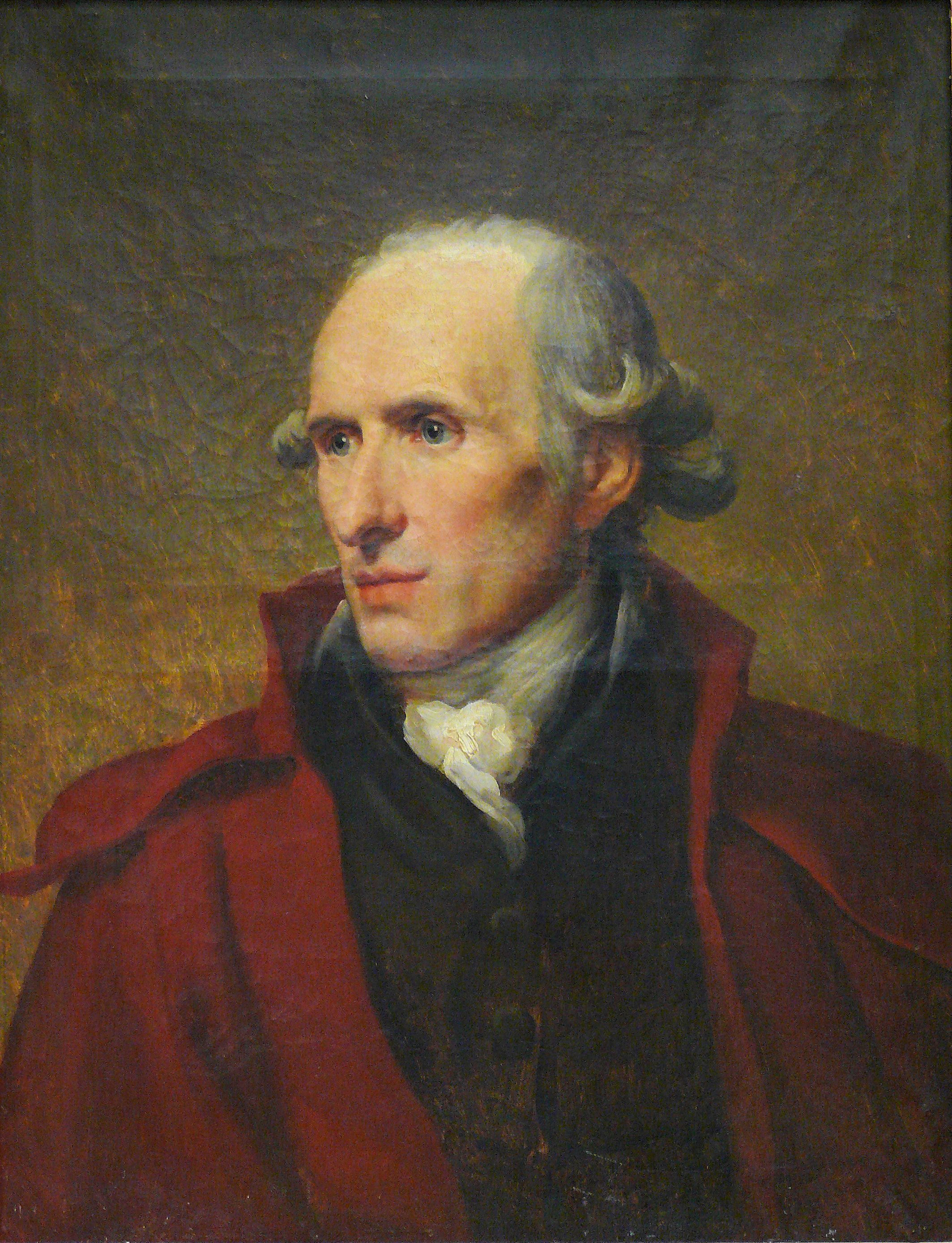
4title: <div class="fn"> <i><a href="//commons.wikimedia.org/wiki/Antonio_Canova" title="Antonio Canova">Antonio Canova</a>, sculpteur</i> </div>
artist: <bdi><a href="https://en.wikipedia.org/wiki/en:Fran%C3%A7ois_G%C3%A9rard" class="extiw" title="w:en:François Gérard">François Gérard</a> </bdi>
date: 1802<div style="display: none;">date QS:P571,+1802-00-00T00:00:00Z/9</div>
medium: oil on canvas
dimensions: Size unit=m width=0.54 height=0.65
current location: Sully - 2 e étage - David et ses élèves - Salle 54 Museum:Louvre
source: u|MOSSOT (2012-03-30)
credit: <a href="//commons.wikimedia.org/wiki/User:MOSSOT" title="User:MOSSOT">MOSSOT</a> (2012-03-30)
description: Portrait d'Antonio <u style="background-color:yellow;" class="">canova</u> peint en 1802 et présenté au Salon de 1808.
license:Public domain
 5
5title: <div class="fn"> <span ><span dir="ltr" lang="en"><i>Theseus defeats the Centaur</i></span></span><div style="display: none;">label QS:Len,"Theseus defeats the Centaur"</div> <div style="display: none;">label QS:Lde,"Theseus besiegt den Kentauren"</div> </div>
artist: <bdi><a href="https://en.wikipedia.org/wiki/en:Antonio_Canova" class="extiw" title="w:en:Antonio Canova">Antonio Canova</a> </bdi>
date: from 1805 until 1819 <div style="display: none;">date QS:P571,+1850-00-00T00:00:00Z/7,P580,+1805-00-00T00:00:00Z/9,P582,+1819-00-00T00:00:00Z/9</div> <a href="https://en.wikipedia.org/wiki/en:Rome" class="extiw" title="w:en:Rome">Rome</a>
current location: Institution:Kunsthistorisches Museum
source: own
credit: <span class="int-own-work" lang="en">Own work</span>
license:Public domain
 6
6title: <div class="fn"> <i>Dedalo e Icaro</i>.</div>
artist: <bdi><a href="https://en.wikipedia.org/wiki/en:Antonio_Canova" class="extiw" title="w:en:Antonio Canova">Antonio Canova</a> </bdi>
date: between 1777 and 1779 <div style="display: none;">date QS:P571,+1777-00-00T00:00:00Z/8,P1319,+1777-00-00T00:00:00Z/9,P1326,+1779-00-00T00:00:00Z/9</div>
medium: Technique marble
current location: Institution:Museo Correr, Venice
source: User:JeanBono/Credit
credit: <table style="margin: 1.5em auto; width:60%; background-color:#ff9; border:2px solid #aaaaaa; padding:1px;" cellspacing="10"><tbody><tr> <td align="center"> <a href="//commons.wikimedia.org/wiki/File:Canon_EOS_Rebel.svg" class="image"><img alt="Canon EOS Rebel.svg" src="https://upload.wikimedia.org/wikipedia/commons/thumb/e/e0/Canon_EOS_Rebel.svg/80px-Canon_EOS_Rebel.svg.png" decoding="async" width="80" height="80" srcset="https://upload.wikimedia.org/wikipedia/commons/thumb/e/e0/Canon_EOS_Rebel.svg/120px-Canon_EOS_Rebel.svg.png 1.5x, https://upload.wikimedia.org/wikipedia/commons/thumb/e/e0/Canon_EOS_Rebel.svg/160px-Canon_EOS_Rebel.svg.png 2x" data-file-width="128" data-file-height="128"></a> </td> <td> <i><a href="https://upload.wikimedia.org/wikipedia/commons/0/02/Antonio_Canova_-_Dedalo_e_Icaro.jpg" class="internal" title="Antonio Canova - Dedalo e Icaro.jpg"><b>This picture</b></a></i> <b>belongs to</b> <i><b><a href="//commons.wikimedia.org/wiki/User:JeanBono" class="mw-redirect" title="User:JeanBono"><b>Xavier Caré</b></a>.</b></i><div class="floatright"><a href="https://twitter.com/Xavier_Care" rel="nofollow"><img alt="Twitter.svg" src="https://upload.wikimedia.org/wikipedia/commons/thumb/d/db/Twitter.svg/20px-Twitter.svg.png" decoding="async" width="20" height="20" srcset="https://upload.wikimedia.org/wikipedia/commons/thumb/d/db/Twitter.svg/30px-Twitter.svg.png 1.5x, https://upload.wikimedia.org/wikipedia/commons/thumb/d/db/Twitter.svg/40px-Twitter.svg.png 2x" data-file-width="256" data-file-height="256"></a></div> <p>Please credit : <i><b>Xavier Caré / Wikimedia Commons / CC-BY-SA</b></i>. </p> <p>If you would like special permission to use, license, or purchase the image please contact me to negotiate terms. </p> <p>I'd appreciate <a href="//commons.wikimedia.org/wiki/Special:EmailUser/JeanBono" title="Special:EmailUser/JeanBono">if you could let me know about it</a> or mail me (<a href="//commons.wikimedia.org/wiki/File:Nuvola_apps_email.png" class="image" title="mail"><img alt="mail" src="https://upload.wikimedia.org/wikipedia/commons/thumb/3/36/Nuvola_apps_email.png/20px-Nuvola_apps_email.png" decoding="async" width="20" height="20" srcset="https://upload.wikimedia.org/wikipedia/commons/thumb/3/36/Nuvola_apps_email.png/30px-Nuvola_apps_email.png 1.5x, https://upload.wikimedia.org/wikipedia/commons/thumb/3/36/Nuvola_apps_email.png/40px-Nuvola_apps_email.png 2x" data-file-width="128" data-file-height="128"></a> <b><span class="nowrap">xavier<img alt="@" src="https://upload.wikimedia.org/wikipedia/commons/thumb/8/88/At_sign.svg/15px-At_sign.svg.png" decoding="async" title="@" width="15" height="15" srcset="https://upload.wikimedia.org/wikipedia/commons/thumb/8/88/At_sign.svg/23px-At_sign.svg.png 1.5x, https://upload.wikimedia.org/wikipedia/commons/thumb/8/88/At_sign.svg/30px-At_sign.svg.png 2x" data-file-width="145" data-file-height="145">famillecare.fr.eu.org</span></b>) if you want to use this picture out of the Wikimedia project scope. </p> </td> </tr></tbody></table> <div style="border:1px solid red; background-color:#eaeeed; margin-top:6px;"> <table cellpadding="3px"><tbody><tr> <td> <p><a href="//commons.wikimedia.org/wiki/File:No_Facebook.svg" class="image"><img alt="No Facebook.svg" src="https://upload.wikimedia.org/wikipedia/commons/thumb/4/48/No_Facebook.svg/80px-No_Facebook.svg.png" decoding="async" width="80" height="30" srcset="https://upload.wikimedia.org/wikipedia/commons/thumb/4/48/No_Facebook.svg/120px-No_Facebook.svg.png 1.5x, https://upload.wikimedia.org/wikipedia/commons/thumb/4/48/No_Facebook.svg/160px-No_Facebook.svg.png 2x" data-file-width="266" data-file-height="100"></a> </p> </td> <td valign="top" colspan="2"> <p>This file has been released under a license which is incompatible with Facebook's licensing terms. It is not permitted to upload this file to Facebook. </p> </td> </tr></tbody></table> </div> <p><br></p>
description: Dédale et Icare, par Antonio <u style="background-color:yellow;" class="">canova</u>, exposé au Musée Correr de Venise en 2017.
license:CC BY-SA 4.0
 7
7title: <div class="fn"> Impressions of intaglios after the statuary of Canova and Thorvaldsen</div>
artist: <bdi><a href="https://en.wikipedia.org/wiki/en:Antonio_Canova" class="extiw" title="w:en:Antonio Canova">Antonio Canova</a> </bdi>
date: circa 1822 <div style="display: none;">date QS:P571,+1822-00-00T00:00:00Z/9,P1480,Q5727902</div>–44
medium: Gesso, paper, leather
dimensions: Gr. W. 6 3/4" (17.2 cm.); H. 10" (25.2 cm.); D. 2 3/16" (5.6 cm.)
current location: Institution:Metropolitan Museum of Art
source: https://www.metmuseum.org/art/collection/search/208094 Template:TheMet
credit: This file was donated to Wikimedia Commons as part of a project by the <a href="//commons.wikimedia.org/wiki/Commons:Met" title="Commons:Met">Metropolitan Museum of Art</a>. See the <a rel="nofollow" class="external text" href="https://metmuseum.org/about-the-met/policies-and-documents/image-resources">Image and Data Resources Open Access Policy</a>
license:CC0
 8
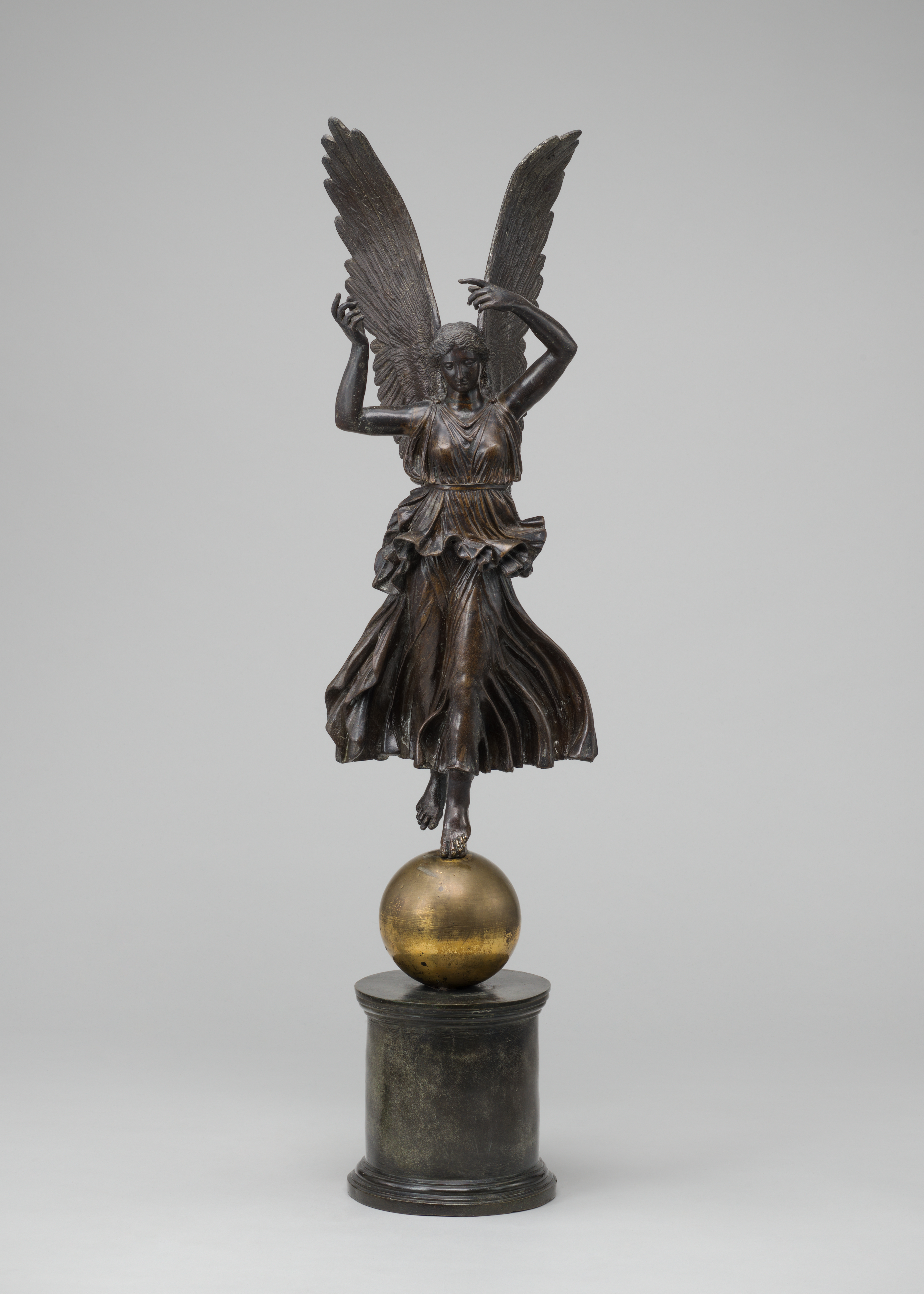
8title: <div class="fn"> <i>Winged Victory </i> </div>
artist: <div class="fn value"> Antonio Canova, after the Antique</div>
date: c. 1803/1806
medium: bronze
dimensions: overall (with base): 76.6 x 20 x 18.1 cm (30 3/16 x 7 7/8 x 7 1/8 in.) gilded globe (diameter): 10.2 cm (4 in.) overall (figure height from left big toe to top of head): 38 cm (14 15/16 in.) overall (figure height from left big toe to right wing tip): 53.3 cm (21 in.) overall (figure height from left big toe to left wing tip): 51.8 cm (20 3/8 in.) base (height): 14.9 cm (5 7/8 in.)
current location: Institution:National Gallery of Art
source: https://purl.org/nga/collection/artobject/73399 Template:NGADC
credit: This file was donated to Wikimedia Commons as part of a project by the <a href="//commons.wikimedia.org/wiki/Commons:NGA" title="Commons:NGA">National Gallery of Art</a>. Please see the Gallery's <a rel="nofollow" class="external text" href="https://images.nga.gov/en/page/openaccess.html">Open Access Policy</a>.
license:CC0
 9
9title: <div class="fn"> <i>Antonio Canova, 1757-1822, Sculptor [obverse] </i> </div>
artist: <div class="fn value"> Stefano Passamonti</div>
date: 1816<div style="display: none;">date QS:P571,+1816-00-00T00:00:00Z/9</div>
medium: lead
dimensions: overall (diameter): 6.81 cm (2 11/16 in.) gross weight: 178.22 gr (0.393 lb.) axis: 12:00
current location: Institution:National Gallery of Art
source: https://purl.org/nga/collection/artobject/117810 Template:NGADC
credit: This file was donated to Wikimedia Commons as part of a project by the <a href="//commons.wikimedia.org/wiki/Commons:NGA" title="Commons:NGA">National Gallery of Art</a>. Please see the Gallery's <a rel="nofollow" class="external text" href="https://images.nga.gov/en/page/openaccess.html">Open Access Policy</a>.
license:CC0
 10
10title: <div class="fn"> Hebe</div>
artist: <bdi><a href="https://en.wikipedia.org/wiki/en:Antonio_Canova" class="extiw" title="w:en:Antonio Canova">Antonio Canova</a> </bdi>
date: 1796<div style="display: none;">date QS:P571,+1796-00-00T00:00:00Z/9</div>
current location: Institution|wikidata=Q700216
source: [[User:Wuselig|Wuselig]]
credit: <a href="//commons.wikimedia.org/wiki/User:Wuselig" title="User:Wuselig">Wuselig</a>
license:Public domain