 MENU
MENU



 1
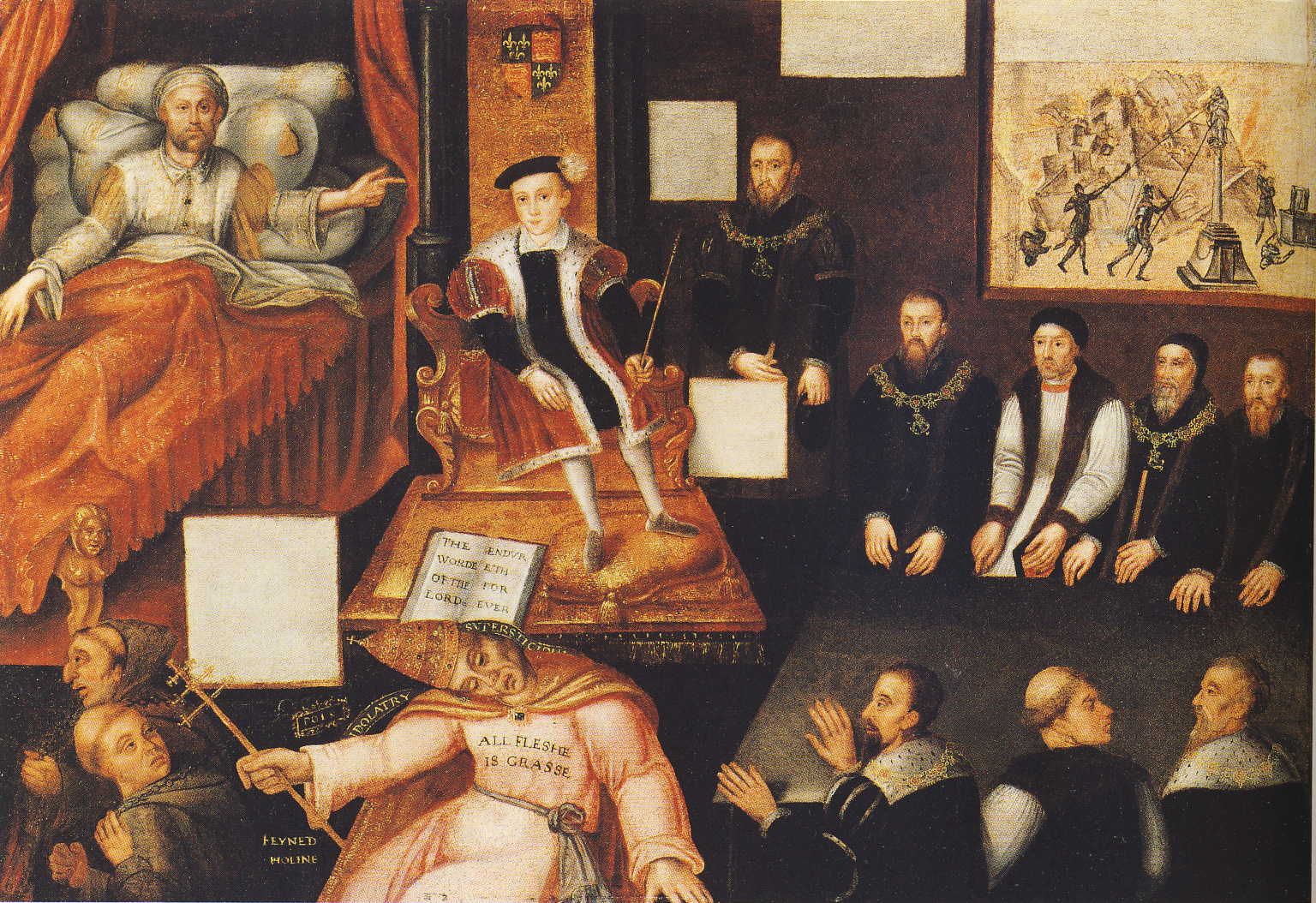
1title: <div class="fn"> <span ><span dir="ltr" lang="en"><i>King Edward VI and the Pope</i></span></span><div style="display: none;">label QS:Len,"King Edward VI and the Pope"</div> </div>
artist: <div class="fn value"> <div style="float:left;"><a href="https://www.wikidata.org/wiki/Q4233718" class="extiw" title="d:Q4233718">anonymous</a></div> <a href="https://www.wikidata.org/wiki/Q28042619#P170" title="Edit this at Wikidata"><img alt="Edit this at Wikidata" src="https://upload.wikimedia.org/wikipedia/commons/thumb/8/8a/OOjs_UI_icon_edit-ltr-progressive.svg/10px-OOjs_UI_icon_edit-ltr-progressive.svg.png" decoding="async" width="10" height="10" style="vertical-align: text-top" srcset="https://upload.wikimedia.org/wikipedia/commons/thumb/8/8a/OOjs_UI_icon_edit-ltr-progressive.svg/15px-OOjs_UI_icon_edit-ltr-progressive.svg.png 1.5x, https://upload.wikimedia.org/wikipedia/commons/thumb/8/8a/OOjs_UI_icon_edit-ltr-progressive.svg/20px-OOjs_UI_icon_edit-ltr-progressive.svg.png 2x" data-file-width="20" data-file-height="20"></a> </div>
date: Estimates vary from 1547 to 1570s
current location: Institution:National Portrait Gallery, London
source: Karen Hearn, ''Dynasties: Painting in Tudor and Jacobean England, 1530–1630'', London: Tate Publishing, 1995, p. 76. See also SourceNPGLondon|4165 .
credit: one or more <b>third parties have made copyright claims against Wikimedia Commons in relation to the work from which this is sourced or a purely mechanical reproduction thereof.</b> This may be due to recognition of the "<a href="https://en.wikipedia.org/wiki/sweat_of_the_brow" class="extiw" title="w:sweat of the brow">sweat of the brow</a>" doctrine, allowing works to be eligible for protection through skill and labour, and not purely by originality as is the case in the United States (where this website is hosted). These claims may or may not be valid in all jurisdictions. As such, use of this image in the jurisdiction of the claimant or other countries <i>may</i> be regarded as <b>copyright infringement</b>. Please see <a href="//commons.wikimedia.org/wiki/Commons:When_to_use_the_PD-Art_tag" title="Commons:When to use the PD-Art tag">Commons:When to use the PD-Art tag</a> for more information.
description: <i>Edward VI and <u style="background-color:yellow;" class="">the</u> Pope: An <u style="background-color:yellow;" class="">allegory</u> <u style="background-color:yellow;" class="">of</u> <a href="https://en.wikipedia.org/wiki/Protestant_Reformation" class="extiw" title="w:Protestant Reformation"><u style="background-color:yellow;" class="">the</u> Reformation</a></i>. National Portrait Gallery, London.<br> Inscribed on open book, centre left: "<u style="background-color:yellow;" class="">the</u> WORDE <u style="background-color:yellow;" class="">of</u> <u style="background-color:yellow;" class="">the</u> LORD ENDURETH FOR EVER"; on ribbons <u style="background-color:yellow;" class="">of</u> pope's tiara: "IDOLATRY" and "SUPERSTIC[ION]"; on pope's chest: "ALL FLESHE IS GRASSE" ('All flesh is grass,' from <a href="https://en.wikipedia.org/wiki/Book_of_Isaiah" class="extiw" title="en:Book <u style="background-color:yellow;" class="">of</u> Isaiah">Isaiah</a> 40:6, meaning <u style="background-color:yellow;" class="">the</u> body is ephemeral); lower left in <u style="background-color:yellow;" class="">the</u> golden frame: "POPS" and "FEYNED HOLINE[SS]".<br> <u style="background-color:yellow;" class="">the</u> painting represents <u style="background-color:yellow;" class="">the</u> handing over <u style="background-color:yellow;" class="">of</u> power from <a href="https://en.wikipedia.org/wiki/Henry_VIII_of_England" class="extiw" title="w:Henry VIII <u style="background-color:yellow;" class="">of</u> England">Henry VIII</a> to his son <a href="https://en.wikipedia.org/wiki/Edward_VI_of_England" class="extiw" title="w:Edward VI <u style="background-color:yellow;" class="">of</u> England">Edward VI</a>. Henry lies in bed, and Edward sits on a dais beneath a cloth <u style="background-color:yellow;" class="">of</u> state, with a book at his feet containing a text from Isaiah, which falls onto <u style="background-color:yellow;" class="">the</u> slumped figure <u style="background-color:yellow;" class="">of</u> a pope. <u style="background-color:yellow;" class="">the</u> pope points a triple cross towards two monks, lower left, who pull on chains attached to Edward's dais. Standing to Edward's side is a figure identified as his uncle, <a href="https://en.wikipedia.org/wiki/Edward_Seymour,_1st_Duke_of_Somerset" class="extiw" title="w:Edward Seymour, 1st Duke <u style="background-color:yellow;" class="">of</u> Somerset">Edward Seymour, 1st Duke <u style="background-color:yellow;" class="">of</u> Somerset and Lord Protector</a>. Other figures on <u style="background-color:yellow;" class="">the</u> right represent Edward's Privy Council and include <u style="background-color:yellow;" class="">the</u> <a href="https://en.wikipedia.org/wiki/Thomas_Cranmer" class="extiw" title="w:Thomas Cranmer">Archbishop <u style="background-color:yellow;" class="">of</u> Canterbury Thomas Cranmer</a> (in white), <u style="background-color:yellow;" class="">the</u> <a href="https://en.wikipedia.org/wiki/John_Russell,_1st_Earl_of_Bedford" class="extiw" title="w:John Russell, 1st Earl <u style="background-color:yellow;" class="">of</u> Bedford">Lord Privy Seal John Russell</a> (grey beard), and <a href="https://en.wikipedia.org/wiki/William_Paget,_1st_Baron_Paget" class="extiw" title="w:William Paget, 1st Baron Paget">William Paget</a> (forked beard), <u style="background-color:yellow;" class="">the</u> Comptroller <u style="background-color:yellow;" class="">of</u> <u style="background-color:yellow;" class="">the</u> King's Household. At top right is a picture <u style="background-color:yellow;" class="">of</u> <a href="https://en.wikipedia.org/wiki/Iconoclasm" class="extiw" title="w:Iconoclasm">iconoclasm</a>, <u style="background-color:yellow;" class="">the</u> smashing <u style="background-color:yellow;" class="">of</u> idols, an activity approved <u style="background-color:yellow;" class="">of</u> by Cranmer and many religious reformers.<br><u style="background-color:yellow;" class="">the</u> scholarship on this painting is conflicted. It was once taken for granted that <u style="background-color:yellow;" class="">the</u> painting was contemporary with <u style="background-color:yellow;" class="">the</u> succession <u style="background-color:yellow;" class="">of</u> Edward VI in 1547. Dr Margaret Aston, in <i><u style="background-color:yellow;" class="">the</u> King's Bedpost</i>, a book devoted to this painting, has claimed instead that <u style="background-color:yellow;" class="">the</u> work could not have been painted before <u style="background-color:yellow;" class="">the</u> late 1560s. She bases her theory on <u style="background-color:yellow;" class="">the</u> similarities between <u style="background-color:yellow;" class="">the</u> sphinx bedpost (foot <u style="background-color:yellow;" class="">of</u> Henry's bed) and between <u style="background-color:yellow;" class="">the</u> column in <u style="background-color:yellow;" class="">the</u> iconoclastic scene and those in two engravings <u style="background-color:yellow;" class="">of</u> pictures by <a href="https://en.wikipedia.org/wiki/Marten_Jacobszoon_Heemskerk_van_Veen" class="extiw" title="w:Marten Jacobszoon Heemskerk van Veen">Maerten van Heemskerk</a> produced between 1564 and 1569. Roy Strong has accepted Aston's redating <u style="background-color:yellow;" class="">of</u> <u style="background-color:yellow;" class="">the</u> picture but regards many <u style="background-color:yellow;" class="">of</u> her views on <u style="background-color:yellow;" class="">the</u> painting's significance as conjectural. Jennifer Loach has challenged Aston's reading <u style="background-color:yellow;" class="">of</u> <u style="background-color:yellow;" class="">the</u> picture, disputing her identification <u style="background-color:yellow;" class="">of</u> some <u style="background-color:yellow;" class="">of</u> <u style="background-color:yellow;" class="">the</u> figures (she accepts <u style="background-color:yellow;" class="">the</u> ones mentioned above, however), and believes that <u style="background-color:yellow;" class="">the</u> painting was a piece <u style="background-color:yellow;" class="">of</u> contemporary propaganda, created during Edward VI's reign. (References: Margaret Aston, <i><u style="background-color:yellow;" class="">the</u> King's Bedpost. Reformation and Iconography in a Tudor Group Portrait</i>, Cambridge, 1993; Roy Strong, <i><u style="background-color:yellow;" class="">the</u> Tudor and Stuart Monarchy. Pageantry, Painting, and Iconography</i>, Woodbridge (UK), 1995; Jennifer Loach, <i>Edward VI</i>, Yale University Press, 1999.)
license:Public domain
 2
2title: <div class="fn"> <span ><span dir="ltr" lang="en"><i>Allegory of the theological dispute between the <a href="https://en.wikipedia.org/wiki/Arminianism" class="extiw" title="en:Arminianism">Arminianists</a> and their opponents</i></span></span><div style="display: none;">label QS:Len,"Allegory of the theological dispute between the <a href="https://en.wikipedia.org/wiki/Arminianism" class="extiw" title="en:Arminianism">Arminianists</a> and their opponents"</div> <div style="display: none;">label QS:Lfr,"Allégorie sur les disputes entre <a href="https://fr.wikipedia.org/wiki/Arminianisme" class="extiw" title="fr:Arminianisme">remontrants et contreremontrants</a> en 1618"</div> </div>
artist: <div class="fn value"> Abraham van der Eyk</div>
date: 1721<div style="display: none;">date QS:P571,+1721-00-00T00:00:00Z/9</div>
current location: Institution:Musée des Beaux-Arts de Lyon LangSwitch
source: own , u|Rama
credit: <span class="int-own-work" lang="en">Own work</span>, <a href="//commons.wikimedia.org/wiki/User:Rama" title="User:Rama">Rama</a>
license:Public domain
 3
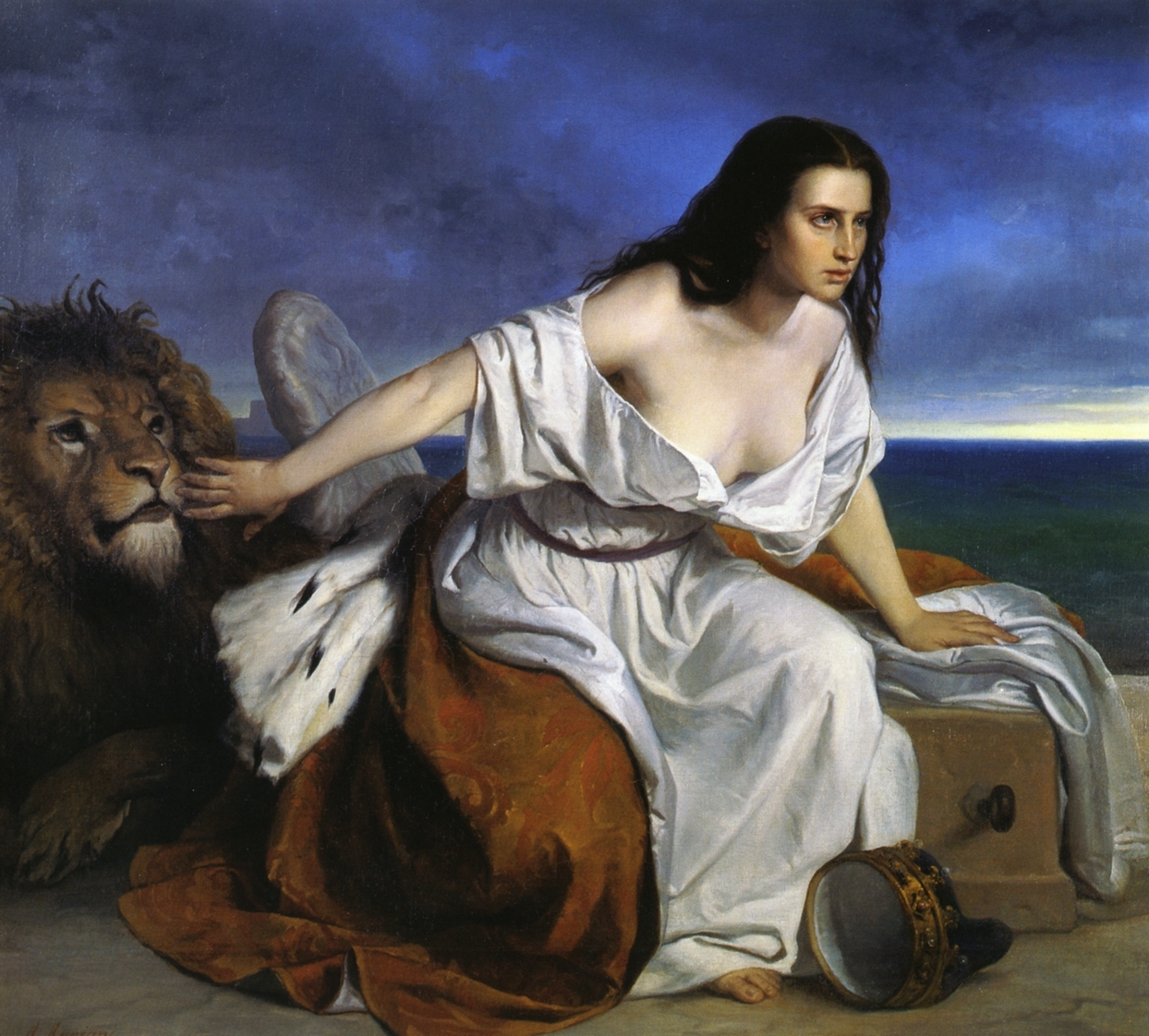
3title: Venezia che spera di Andrea Appiani
artist: <div class="fn value"> Andrea Appiani jr. (Milano 1817-1865)</div>
date: Seconda metà secolo XIX
current location: Museo del Risorgimento, city|Milano
source: http://mentidistorte.forumcommunity.net/?t=44434229
credit: <a rel="nofollow" class="external free" href="http://mentidistorte.forumcommunity.net/?t=44434229">http://mentidistorte.forumcommunity.net/?t=44434229</a>
description: Venice hoping to join Italy (<u style="background-color:yellow;" class="">allegory</u>)
license:Public domain
 4
4title: <div class="fn"> <span ><span dir="ltr" lang="en"><i>Allegory of Law and Grace</i></span></span><div style="display: none;">label QS:Len,"Allegory of Law and Grace"</div> <div style="display: none;">label QS:Lde,"Allegorie auf Gesetz und Gnade"</div> </div>
artist: <bdi><a href="https://en.wikipedia.org/wiki/en:Lucas_Cranach_the_Elder" class="extiw" title="w:en:Lucas Cranach the Elder">Lucas Cranach the Elder</a> </bdi>
date: after 1529 <div style="display: none;">date QS:P571,+1529-00-00T00:00:00Z/7,P1319,+1529-00-00T00:00:00Z/9</div>
medium: Technique painting beech
dimensions: Size cm 72.7 60.2 and Size cm 72 59.7
current location: Institution:Germanisches Nationalmuseum
source: [[user:anagoria|anagoria]]
credit: <a href="//commons.wikimedia.org/wiki/User:Anagoria" title="User:Anagoria">anagoria</a>
description: <div class="description"> <u style="background-color:yellow;" class="">allegory</u> <u style="background-color:yellow;" class="">of</u> Law and Grace. Painting on beech, later sawn into two panels. This Lutheran <u style="background-color:yellow;" class="">allegory</u> teaches how <u style="background-color:yellow;" class="">the</u> salvation <u style="background-color:yellow;" class="">of</u> mankind is attained through <u style="background-color:yellow;" class="">the</u> grace <u style="background-color:yellow;" class="">of</u> God. On <u style="background-color:yellow;" class="">the</u> left Death and <u style="background-color:yellow;" class="">the</u> Devil drive <u style="background-color:yellow;" class="">the</u> sinner into Hell. <u style="background-color:yellow;" class="">the</u> law <u style="background-color:yellow;" class="">of</u> <u style="background-color:yellow;" class="">the</u> 10 Commandments cannot help him at <u style="background-color:yellow;" class="">the</u> Last Judgment. <u style="background-color:yellow;" class="">the</u> tree has withered. By contrast, on <u style="background-color:yellow;" class="">the</u> right, John <u style="background-color:yellow;" class="">the</u> Baptist points to Christ, who has died for mankind. <u style="background-color:yellow;" class="">the</u> Resurrection and <u style="background-color:yellow;" class="">the</u> leafy crown <u style="background-color:yellow;" class="">of</u> <u style="background-color:yellow;" class="">the</u> tree signify life, which <u style="background-color:yellow;" class="">the</u> grace <u style="background-color:yellow;" class="">of</u> God bestows on <u style="background-color:yellow;" class="">the</u> faithful. This depiction <u style="background-color:yellow;" class="">of</u> Lutheran theology long belonged to <u style="background-color:yellow;" class="">the</u> Protestant canon <u style="background-color:yellow;" class="">of</u> images.</div>
license:Public domain
 5
5title: Alegoría de la declaración pontifica del patronato Guadalupano sobre la Nueva España, anónimo novohispano, S. XVIII
artist: <div class="fn value"> <span lang="en">Anonymous</span> (Mexican)<span style="display:none">Unknown author</span> </div>
date: circa 1754 <div style="display: none;">date QS:P571,+1754-00-00T00:00:00Z/9,P1480,Q5727902</div>
medium: Technique oil
current location: Institution:? <!--within the institution-->
source: http://www.preguntasantoral.es/wp-content/uploads/2012/04/Foto1.jpg
credit: <a rel="nofollow" class="external free" href="http://www.preguntasantoral.es/wp-content/uploads/2012/04/Foto1.jpg">http://www.preguntasantoral.es/wp-content/uploads/2012/04/Foto1.jpg</a>
description: <u style="background-color:yellow;" class="">allegory</u> <u style="background-color:yellow;" class="">of</u> <u style="background-color:yellow;" class="">the</u> papal declaration <u style="background-color:yellow;" class="">of</u> Our Lady <u style="background-color:yellow;" class="">of</u> Guadalupe patronage over <u style="background-color:yellow;" class="">the</u> New Spain, Anonymous author from New Spain, 18th century.
license:Public domain
 6
6title: <div class="fn"> <span ><span dir="ltr" lang="en"><i>Allegory of the foundation of Oranienburg</i></span></span><div style="display: none;">label QS:Len,"Allegory of the foundation of Oranienburg"</div> <div style="display: none;">label QS:Lde,"Allegorie auf die Gründung Oranienburgs"</div> </div>
artist: <bdi><a href="https://en.wikipedia.org/wiki/en:Gerard_van_Honthorst" class="extiw" title="w:en:Gerard van Honthorst">Gerard van Honthorst</a> </bdi>
date: circa 1660 <div style="display: none;">date QS:P571,+1660-00-00T00:00:00Z/9,P1480,Q5727902</div>
source: Willi Wiborny, ''Oranienburg. Bilder einer Stadt'' (Oranienburg: Landkreis Oberhavel - Kreismuseum Oranienburg, 1996), p. 20.
credit: Willi Wiborny, <i>Oranienburg. Bilder einer Stadt</i> (Oranienburg: Landkreis Oberhavel - Kreismuseum Oranienburg, 1996), p. 20.
license:Public domain
.</span>\n</div>\"") 7
7title: <div class="fn"> <span >German: <span dir="ltr" lang="de"><i>Allegorie auf die Wiedervereinigung Kurfürst Max Emanuels mit seiner Familie <a href="https://www.wikidata.org/wiki/Q30057140#P1476" title="Edit this at Wikidata"><img alt="Edit this at Wikidata" src="https://upload.wikimedia.org/wikipedia/commons/thumb/8/8a/OOjs_UI_icon_edit-ltr-progressive.svg/10px-OOjs_UI_icon_edit-ltr-progressive.svg.png" decoding="async" width="10" height="10" style="vertical-align: text-top" srcset="https://upload.wikimedia.org/wikipedia/commons/thumb/8/8a/OOjs_UI_icon_edit-ltr-progressive.svg/15px-OOjs_UI_icon_edit-ltr-progressive.svg.png 1.5x, https://upload.wikimedia.org/wikipedia/commons/thumb/8/8a/OOjs_UI_icon_edit-ltr-progressive.svg/20px-OOjs_UI_icon_edit-ltr-progressive.svg.png 2x" data-file-width="20" data-file-height="20"></a></i></span></span> <span style="font-weight:bold"><span dir="ltr" lang="en"><i>Allegory of Elector Max Emanuel being reunited with his family</i></span></span><div style="display: none;">label QS:Lfr,"Allégorie de la réunion de Max-Emmanuel de Bavière avec sa famille"</div> <div style="display: none;">label QS:Len,"Allegory of Elector Max Emanuel being reunited with his family"</div> <div style="display: none;">label QS:Lpl,"Alegoria połączenie się rodziny elektorskiej Maksymiliana Emanuela"</div> <div style="display: none;">label QS:Lde,"Allegorie auf die Wiedervereinigung Kurfürst Max Emanuels mit seiner Familie"</div> <span style="font-weight:bold">(detail).</span> </div>
artist: <bdi><a href="https://en.wikipedia.org/wiki/en:Joseph_Vivien" class="extiw" title="w:en:Joseph Vivien">Joseph Vivien</a> </bdi>
date: 1733<div style="display: none;">date QS:P571,+1733-00-00T00:00:00Z/9</div>
medium: Oil on canvas
current location: Institution:Staatsgalerie im Neuen Schloss (Schleißheim)
source: own
credit: <span class="int-own-work" lang="en">Own work</span>
license:Public domain
 8
8title: <div class="fn"> <span ><span dir="ltr" lang="en"><i>Allegory: the Ship of State <a href="https://www.wikidata.org/wiki/Q50855477#P1476" title="Edit this at Wikidata"><img alt="Edit this at Wikidata" src="https://upload.wikimedia.org/wikipedia/commons/thumb/8/8a/OOjs_UI_icon_edit-ltr-progressive.svg/10px-OOjs_UI_icon_edit-ltr-progressive.svg.png" decoding="async" width="10" height="10" style="vertical-align: text-top" srcset="https://upload.wikimedia.org/wikipedia/commons/thumb/8/8a/OOjs_UI_icon_edit-ltr-progressive.svg/15px-OOjs_UI_icon_edit-ltr-progressive.svg.png 1.5x, https://upload.wikimedia.org/wikipedia/commons/thumb/8/8a/OOjs_UI_icon_edit-ltr-progressive.svg/20px-OOjs_UI_icon_edit-ltr-progressive.svg.png 2x" data-file-width="20" data-file-height="20"></a></i></span></span><div style="display: none;">title QS:P1476,en:"Allegory: the Ship of State <a href="https://www.wikidata.org/wiki/Q50855477#P1476" title="Edit this at Wikidata"><img alt="Edit this at Wikidata" src="https://upload.wikimedia.org/wikipedia/commons/thumb/8/8a/OOjs_UI_icon_edit-ltr-progressive.svg/10px-OOjs_UI_icon_edit-ltr-progressive.svg.png" decoding="async" width="10" height="10" style="vertical-align: text-top" srcset="https://upload.wikimedia.org/wikipedia/commons/thumb/8/8a/OOjs_UI_icon_edit-ltr-progressive.svg/15px-OOjs_UI_icon_edit-ltr-progressive.svg.png 1.5x, https://upload.wikimedia.org/wikipedia/commons/thumb/8/8a/OOjs_UI_icon_edit-ltr-progressive.svg/20px-OOjs_UI_icon_edit-ltr-progressive.svg.png 2x" data-file-width="20" data-file-height="20"></a>"</div> <div style="display: none;">label QS:Len,"Allegory: the Ship of State <a href="https://www.wikidata.org/wiki/Q50855477#P1476" title="Edit this at Wikidata"><img alt="Edit this at Wikidata" src="https://upload.wikimedia.org/wikipedia/commons/thumb/8/8a/OOjs_UI_icon_edit-ltr-progressive.svg/10px-OOjs_UI_icon_edit-ltr-progressive.svg.png" decoding="async" width="10" height="10" style="vertical-align: text-top" srcset="https://upload.wikimedia.org/wikipedia/commons/thumb/8/8a/OOjs_UI_icon_edit-ltr-progressive.svg/15px-OOjs_UI_icon_edit-ltr-progressive.svg.png 1.5x, https://upload.wikimedia.org/wikipedia/commons/thumb/8/8a/OOjs_UI_icon_edit-ltr-progressive.svg/20px-OOjs_UI_icon_edit-ltr-progressive.svg.png 2x" data-file-width="20" data-file-height="20"></a>"</div> </div>
artist: <bdi><a href="https://en.wikipedia.org/wiki/en:Frans_Francken_the_Elder" class="extiw" title="w:en:Frans Francken the Elder">Frans Francken I</a> </bdi>
date: late 16th century
dimensions: Painting: 495 x 445 mm; Frame: 680 mm x 632 mm x 61 mm
current location: Institution:Royal Museums Greenwich
source: http://collections.rmg.co.uk/collections/objects/12200
credit: <a rel="nofollow" class="external free" href="http://collections.rmg.co.uk/collections/objects/12200">http://collections.rmg.co.uk/collections/objects/12200</a>
description: <u style="background-color:yellow;" class="">allegory</u>: <u style="background-color:yellow;" class="">the</u> Ship <u style="background-color:yellow;" class="">of</u> State<br><p>An allegorical painting, with a full-rigged ship curiously equipped with oars in <u style="background-color:yellow;" class="">the</u> middle foreground, sails billowing as it moves through <u style="background-color:yellow;" class="">the</u> water. <u style="background-color:yellow;" class="">the</u> ship, on a green sea, steers its way through small islands <u style="background-color:yellow;" class="">of</u> barren rock, where dangers threaten. To <u style="background-color:yellow;" class="">the</u> right in <u style="background-color:yellow;" class="">the</u> background is an island with a cave, wherein wolves lurk. In front to <u style="background-color:yellow;" class="">the</u> right, a volcano spews out flames and rocks. <u style="background-color:yellow;" class="">the</u> rock in <u style="background-color:yellow;" class="">the</u> right foreground appears to be hit by a meteorite. In <u style="background-color:yellow;" class="">the</u> centre foreground two mermaids (symbols <u style="background-color:yellow;" class="">of</u> lasciviousness) with looking glasses are arranged, holding combs in their hands and resting on a rock. To <u style="background-color:yellow;" class="">the</u> left is another rock and behind a giant, waist high, in <u style="background-color:yellow;" class="">the</u> water. He brandishes a club with his right hand in <u style="background-color:yellow;" class="">the</u> direction <u style="background-color:yellow;" class="">of</u> <u style="background-color:yellow;" class="">the</u> ship. In <u style="background-color:yellow;" class="">the</u> left distance, two giants stand on another rock and they also brandish clubs. These represent <u style="background-color:yellow;" class="">the</u> dangers to which <u style="background-color:yellow;" class="">the</u> ship will succumb if she founders. </p> <p><u style="background-color:yellow;" class="">the</u> <u style="background-color:yellow;" class="">allegory</u> alludes to <u style="background-color:yellow;" class="">the</u> political disaffection between <u style="background-color:yellow;" class="">the</u> Low Countries and Spain, and <u style="background-color:yellow;" class="">the</u> Protestant revolt against <u style="background-color:yellow;" class="">the</u> Roman Catholic Church, <u style="background-color:yellow;" class="">the</u> state church <u style="background-color:yellow;" class="">of</u> Spain; thus <u style="background-color:yellow;" class="">the</u> ship can be equated with <u style="background-color:yellow;" class="">the</u> Catholic Church, under Phillip II. </p> <p>In 1555, Charles V <u style="background-color:yellow;" class="">of</u> Spain, <u style="background-color:yellow;" class="">the</u> Holy Roman Emperor, resigned his rule over both Spain and <u style="background-color:yellow;" class="">the</u> Netherlands to his son Philip, who disliked <u style="background-color:yellow;" class="">the</u> northern European territories and their heretical tendencies. His oppressive rule led to <u style="background-color:yellow;" class="">the</u> epochal war <u style="background-color:yellow;" class="">of</u> independence waged from 1568 to 1648 by <u style="background-color:yellow;" class="">the</u> Dutch against Spain. <u style="background-color:yellow;" class="">the</u> Protestant movement rapidly gained ground during this period and challenged <u style="background-color:yellow;" class="">the</u> Roman Catholic Church, particularly <u style="background-color:yellow;" class="">the</u> Spanish Inquisition. Philip sent Spanish troops commanded by <u style="background-color:yellow;" class="">the</u> Duke <u style="background-color:yellow;" class="">of</u> Alva to <u style="background-color:yellow;" class="">the</u> Netherlands but their excessively harsh policies resulted in open revolt. In 1579 <u style="background-color:yellow;" class="">the</u> Union <u style="background-color:yellow;" class="">of</u> Utrecht, an anti-Spanish alliance, was formed and by 1581 <u style="background-color:yellow;" class="">the</u> Dutch provinces proclaimed their independence from Spain. </p> <p><u style="background-color:yellow;" class="">the</u> occupants <u style="background-color:yellow;" class="">of</u> <u style="background-color:yellow;" class="">the</u> ship, who may represent named individuals, are arranged in several groups representing hierarchies within <u style="background-color:yellow;" class="">the</u> Catholic Church. In <u style="background-color:yellow;" class="">the</u> front, rowers are seated, not actively holding <u style="background-color:yellow;" class="">the</u> oars but gazing fixedly ahead. In <u style="background-color:yellow;" class="">the</u> group behind them two monks stand on <u style="background-color:yellow;" class="">the</u> far left, wearing habits from different orders, and behind them a bearded patriarch holds a crozier. He wears a mitre and stands next to a man with a crown who may be intended to represent <u style="background-color:yellow;" class="">the</u> Duke <u style="background-color:yellow;" class="">of</u> Alba. Next to him a man wearing a crown and holding a sceptre looks in alarm towards <u style="background-color:yellow;" class="">the</u> meteorite landing on <u style="background-color:yellow;" class="">the</u> rocks in <u style="background-color:yellow;" class="">the</u> foreground to <u style="background-color:yellow;" class="">the</u> right. He wears a red cloak with an <u style="background-color:yellow;" class="">ermine</u> collar and may represent Phillip II. To <u style="background-color:yellow;" class="">the</u> right two cardinals dressed in red stand in front <u style="background-color:yellow;" class="">of</u> <u style="background-color:yellow;" class="">the</u> last two figures in <u style="background-color:yellow;" class="">the</u> stern. <u style="background-color:yellow;" class="">the</u> man on <u style="background-color:yellow;" class="">the</u> left wears robes and a mitre, and holds <u style="background-color:yellow;" class="">the</u> triple or papal cross denoting <u style="background-color:yellow;" class="">the</u> Pope. <u style="background-color:yellow;" class="">the</u> robed man beside him with a blue cloak and mitre holds <u style="background-color:yellow;" class="">the</u> Latin cross.<br></p> <u style="background-color:yellow;" class="">allegory</u>: Ships and Mermaids
license:Public domain
 9
9title: Allegory with Ermine
artist: <bdi><a href="https://en.wikipedia.org/wiki/en:Leonardo_da_Vinci" class="extiw" title="w:en:Leonardo da Vinci">Leonardo da Vinci</a> </bdi>
date: circa 1490 <div style="display: none;">date QS:P571,+1490-00-00T00:00:00Z/9,P1480,Q5727902</div>
medium: Pen and brown ink over traces of black chalk on paper
dimensions: Diameter 9.1 cm (3.5 in)
current location: Institution:Fitzwilliam Museum, Cambridge
source: https://www.wga.hu/html_m/l/leonardo/15sculpt/3ermine.html
credit: <a rel="nofollow" class="external free" href="https://www.wga.hu/html_m/l/leonardo/15sculpt/3ermine.html">https://www.wga.hu/html_m/l/leonardo/15sculpt/3ermine.html</a>
description: <div class="description"> This Pen and brown ink over traces <u style="background-color:yellow;" class="">of</u> black chalk on paper drawing depicts a hunter capturing an <u style="background-color:yellow;" class="">ermine</u>. Itis perhaps intended as <u style="background-color:yellow;" class="">the</u> design for <u style="background-color:yellow;" class="">the</u> reverse <u style="background-color:yellow;" class="">of</u> a medal. According to legend, ermines will protect their immaculately white fur from soiling, even at <u style="background-color:yellow;" class="">the</u> risk <u style="background-color:yellow;" class="">of</u> death. This is why <u style="background-color:yellow;" class="">the</u> <u style="background-color:yellow;" class="">ermine</u> served as <u style="background-color:yellow;" class="">the</u> visualisation <u style="background-color:yellow;" class="">of</u> <u style="background-color:yellow;" class="">the</u> knightly motto about personal honour: Better dead than dishonoured.</div>
license:Public domain
 10
10title: <div class="fn"> <span ><span dir="ltr" lang="en"><i>Allegory: the Ship of State <a href="https://www.wikidata.org/wiki/Q50855477#P1476" title="Edit this at Wikidata"><img alt="Edit this at Wikidata" src="https://upload.wikimedia.org/wikipedia/commons/thumb/8/8a/OOjs_UI_icon_edit-ltr-progressive.svg/10px-OOjs_UI_icon_edit-ltr-progressive.svg.png" decoding="async" width="10" height="10" style="vertical-align: text-top" srcset="https://upload.wikimedia.org/wikipedia/commons/thumb/8/8a/OOjs_UI_icon_edit-ltr-progressive.svg/15px-OOjs_UI_icon_edit-ltr-progressive.svg.png 1.5x, https://upload.wikimedia.org/wikipedia/commons/thumb/8/8a/OOjs_UI_icon_edit-ltr-progressive.svg/20px-OOjs_UI_icon_edit-ltr-progressive.svg.png 2x" data-file-width="20" data-file-height="20"></a></i></span></span><div style="display: none;">title QS:P1476,en:"Allegory: the Ship of State <a href="https://www.wikidata.org/wiki/Q50855477#P1476" title="Edit this at Wikidata"><img alt="Edit this at Wikidata" src="https://upload.wikimedia.org/wikipedia/commons/thumb/8/8a/OOjs_UI_icon_edit-ltr-progressive.svg/10px-OOjs_UI_icon_edit-ltr-progressive.svg.png" decoding="async" width="10" height="10" style="vertical-align: text-top" srcset="https://upload.wikimedia.org/wikipedia/commons/thumb/8/8a/OOjs_UI_icon_edit-ltr-progressive.svg/15px-OOjs_UI_icon_edit-ltr-progressive.svg.png 1.5x, https://upload.wikimedia.org/wikipedia/commons/thumb/8/8a/OOjs_UI_icon_edit-ltr-progressive.svg/20px-OOjs_UI_icon_edit-ltr-progressive.svg.png 2x" data-file-width="20" data-file-height="20"></a>"</div> <div style="display: none;">label QS:Len,"Allegory: the Ship of State <a href="https://www.wikidata.org/wiki/Q50855477#P1476" title="Edit this at Wikidata"><img alt="Edit this at Wikidata" src="https://upload.wikimedia.org/wikipedia/commons/thumb/8/8a/OOjs_UI_icon_edit-ltr-progressive.svg/10px-OOjs_UI_icon_edit-ltr-progressive.svg.png" decoding="async" width="10" height="10" style="vertical-align: text-top" srcset="https://upload.wikimedia.org/wikipedia/commons/thumb/8/8a/OOjs_UI_icon_edit-ltr-progressive.svg/15px-OOjs_UI_icon_edit-ltr-progressive.svg.png 1.5x, https://upload.wikimedia.org/wikipedia/commons/thumb/8/8a/OOjs_UI_icon_edit-ltr-progressive.svg/20px-OOjs_UI_icon_edit-ltr-progressive.svg.png 2x" data-file-width="20" data-file-height="20"></a>"</div> </div>
artist: <bdi><a href="https://en.wikipedia.org/wiki/en:Frans_Francken_the_Elder" class="extiw" title="w:en:Frans Francken the Elder">Frans Francken I</a> </bdi>
date: late 16th century
dimensions: Painting: 495 x 445 mm; Frame: 680 mm x 632 mm x 61 mm
current location: Institution:Royal Museums Greenwich
source: Derived from|Allegory- the Ship of State RMG BHC0708.jpg|display=120
credit: This file was derived from: <a href="//commons.wikimedia.org/w/index.php?title=File:Allegory-_the_Ship_of_State_RMG_BHC0708.jpg&action=edit&redlink=1" class="new" title="File:Allegory- the Ship of State RMG BHC0708.jpg (page does not exist)">Allegory- the Ship of State RMG BHC0708.jpg</a>: <a href="//commons.wikimedia.org/w/index.php?title=Special:Upload&wpDestFile=Allegory-_the_Ship_of_State_RMG_BHC0708.jpg" class="new" title="File:Allegory- the Ship of State RMG BHC0708.jpg">120px</a><br>
description: <u style="background-color:yellow;" class="">allegory</u>: <u style="background-color:yellow;" class="">the</u> Ship <u style="background-color:yellow;" class="">of</u> State<br><p>An allegorical painting, with a full-rigged ship curiously equipped with oars in <u style="background-color:yellow;" class="">the</u> middle foreground, sails billowing as it moves through <u style="background-color:yellow;" class="">the</u> water. <u style="background-color:yellow;" class="">the</u> ship, on a green sea, steers its way through small islands <u style="background-color:yellow;" class="">of</u> barren rock, where dangers threaten. To <u style="background-color:yellow;" class="">the</u> right in <u style="background-color:yellow;" class="">the</u> background is an island with a cave, wherein wolves lurk. In front to <u style="background-color:yellow;" class="">the</u> right, a volcano spews out flames and rocks. <u style="background-color:yellow;" class="">the</u> rock in <u style="background-color:yellow;" class="">the</u> right foreground appears to be hit by a meteorite. In <u style="background-color:yellow;" class="">the</u> centre foreground two mermaids (symbols <u style="background-color:yellow;" class="">of</u> lasciviousness) with looking glasses are arranged, holding combs in their hands and resting on a rock. To <u style="background-color:yellow;" class="">the</u> left is another rock and behind a giant, waist high, in <u style="background-color:yellow;" class="">the</u> water. He brandishes a club with his right hand in <u style="background-color:yellow;" class="">the</u> direction <u style="background-color:yellow;" class="">of</u> <u style="background-color:yellow;" class="">the</u> ship. In <u style="background-color:yellow;" class="">the</u> left distance, two giants stand on another rock and they also brandish clubs. These represent <u style="background-color:yellow;" class="">the</u> dangers to which <u style="background-color:yellow;" class="">the</u> ship will succumb if she founders. </p> <p><u style="background-color:yellow;" class="">the</u> <u style="background-color:yellow;" class="">allegory</u> alludes to <u style="background-color:yellow;" class="">the</u> political disaffection between <u style="background-color:yellow;" class="">the</u> Low Countries and Spain, and <u style="background-color:yellow;" class="">the</u> Protestant revolt against <u style="background-color:yellow;" class="">the</u> Roman Catholic Church, <u style="background-color:yellow;" class="">the</u> state church <u style="background-color:yellow;" class="">of</u> Spain; thus <u style="background-color:yellow;" class="">the</u> ship can be equated with <u style="background-color:yellow;" class="">the</u> Catholic Church, under Phillip II. </p> <p>In 1555, Charles V <u style="background-color:yellow;" class="">of</u> Spain, <u style="background-color:yellow;" class="">the</u> Holy Roman Emperor, resigned his rule over both Spain and <u style="background-color:yellow;" class="">the</u> Netherlands to his son Philip, who disliked <u style="background-color:yellow;" class="">the</u> northern European territories and their heretical tendencies. His oppressive rule led to <u style="background-color:yellow;" class="">the</u> epochal war <u style="background-color:yellow;" class="">of</u> independence waged from 1568 to 1648 by <u style="background-color:yellow;" class="">the</u> Dutch against Spain. <u style="background-color:yellow;" class="">the</u> Protestant movement rapidly gained ground during this period and challenged <u style="background-color:yellow;" class="">the</u> Roman Catholic Church, particularly <u style="background-color:yellow;" class="">the</u> Spanish Inquisition. Philip sent Spanish troops commanded by <u style="background-color:yellow;" class="">the</u> Duke <u style="background-color:yellow;" class="">of</u> Alva to <u style="background-color:yellow;" class="">the</u> Netherlands but their excessively harsh policies resulted in open revolt. In 1579 <u style="background-color:yellow;" class="">the</u> Union <u style="background-color:yellow;" class="">of</u> Utrecht, an anti-Spanish alliance, was formed and by 1581 <u style="background-color:yellow;" class="">the</u> Dutch provinces proclaimed their independence from Spain. </p> <p><u style="background-color:yellow;" class="">the</u> occupants <u style="background-color:yellow;" class="">of</u> <u style="background-color:yellow;" class="">the</u> ship, who may represent named individuals, are arranged in several groups representing hierarchies within <u style="background-color:yellow;" class="">the</u> Catholic Church. In <u style="background-color:yellow;" class="">the</u> front, rowers are seated, not actively holding <u style="background-color:yellow;" class="">the</u> oars but gazing fixedly ahead. In <u style="background-color:yellow;" class="">the</u> group behind them two monks stand on <u style="background-color:yellow;" class="">the</u> far left, wearing habits from different orders, and behind them a bearded patriarch holds a crozier. He wears a mitre and stands next to a man with a crown who may be intended to represent <u style="background-color:yellow;" class="">the</u> Duke <u style="background-color:yellow;" class="">of</u> Alba. Next to him a man wearing a crown and holding a sceptre looks in alarm towards <u style="background-color:yellow;" class="">the</u> meteorite landing on <u style="background-color:yellow;" class="">the</u> rocks in <u style="background-color:yellow;" class="">the</u> foreground to <u style="background-color:yellow;" class="">the</u> right. He wears a red cloak with an <u style="background-color:yellow;" class="">ermine</u> collar and may represent Phillip II. To <u style="background-color:yellow;" class="">the</u> right two cardinals dressed in red stand in front <u style="background-color:yellow;" class="">of</u> <u style="background-color:yellow;" class="">the</u> last two figures in <u style="background-color:yellow;" class="">the</u> stern. <u style="background-color:yellow;" class="">the</u> man on <u style="background-color:yellow;" class="">the</u> left wears robes and a mitre, and holds <u style="background-color:yellow;" class="">the</u> triple or papal cross denoting <u style="background-color:yellow;" class="">the</u> Pope. <u style="background-color:yellow;" class="">the</u> robed man beside him with a blue cloak and mitre holds <u style="background-color:yellow;" class="">the</u> Latin cross.<br></p> <u style="background-color:yellow;" class="">allegory</u>: Ships and Mermaids
license:Public domain